Hotel & Hospitality Tapware: Where Compliance Meets Guest Experience
Friday 31 July 2026
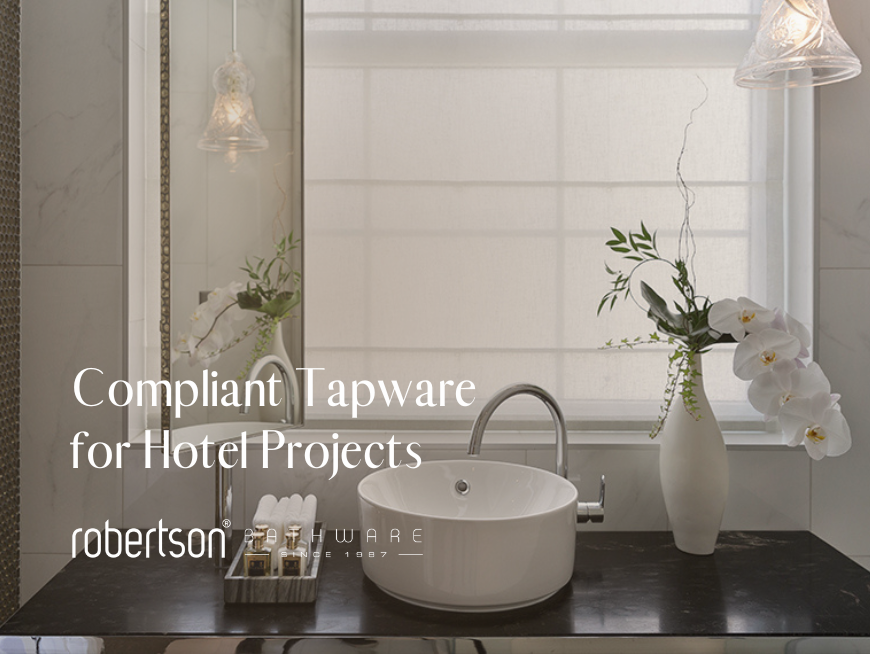
There are two things a hotel developer, operator, or hospitality project manager cannot afford to get wrong when specifying tapware. The first is compliance - every copper alloy fitting in contact with potable water must now meet New Zealand's updated Building Code requirements, and a failed inspection on a large-scale project has consequences that cascade across the entire programme. The second is aesthetics - a guest's impression of a hotel room is formed in large part by what they see and touch at close quarters, and the basin mixer is one of the first things they reach for.
Getting both right simultaneously is not complicated, provided the product selection and supplier relationship are structured correctly from the start. This post is written for the people responsible for making that happen - hotel developers, hospitality project managers, architects with a hospitality portfolio, and procurement teams managing large-scale fit-outs.
If you are new to the G12/AS1 Amendment 14 changes and want the foundation before reading on, our earlier posts in this series cover what DZR brass means, the specifier's guide to compliance documentation, and the homeowner-focused overview. The original announcement remains the definitive reference for the regulatory detail.
The compliance challenge at hospitality scale
For a single residential bathroom, the compliance question under G12/AS1 Amendment 14 is relatively contained: the tapware must be lead-free, the relevant components must be DZR brass, and the supplier should be able to produce a Supplier's Declaration of Compliance (SDoc) on request. One product, one bathroom, one document.
For a hotel, that calculation multiplies immediately. A 100-room property might have 100 basin mixers, 100 shower mixer valves, a mix of thermostatic systems for specific room types, separate tapware for spa facilities, kitchen and food service areas, staff amenities, and public bathrooms. Each product category needs to be compliant. Each product needs an SDoc. All of it needs to be documented in a form that satisfies building consent requirements, withstands inspection, and can be referenced by the facilities management team for the life of the building.
Add to this the procurement complexity - coordinating delivery across a staged fit-out programme, managing substitution risk when a product becomes unavailable mid-project, and aligning tapware selections with bathroom finishes that may be specified by an interior designer working independently of the procurement team - and the tapware specification for a large hospitality project becomes a significant piece of project management in its own right.
James Robertson, General Manager Distribution at Robertson Bathware, works with hotel developers and project managers across New Zealand and has seen the consequences of underestimating this complexity. "Tapware is one of those items that can look straightforward on a procurement schedule but becomes genuinely complicated at scale," he says. "The compliance layer that's now been added means you can't just find the best price on a basin mixer and assume it's sorted. You need to know the product is compliant, you need the documentation, and you need a supplier who can manage that process across every product in every room. That's a very different conversation to a one-off transaction."
You can read more about James and the Robertson team at robertson.co.nz/our-people.
-1785448609-COPY.png)
Why tapware selection is more complex in hotels
Beyond the compliance dimension, tapware selection for hospitality projects carries design and operational considerations that do not apply in the same way to residential specification.
Consistency at volume. A hotel's brand identity requires that every guest room delivers the same quality of experience, which means every basin mixer in every bathroom needs to be the same product - or a deliberate, intentional variation within a defined system. An inconsistency in specification that would be a minor issue in a single home becomes a visible, recurring problem across 80 or 100 rooms.
Mixed product types within a single property. A hotel bathroom specification is rarely limited to a single product category. Guest bathrooms might use wall-mounted basin mixers. Spa rooms might have freestanding mixers. Commercial kitchen and staff amenity areas require their own compliant product specifications. Public bathrooms are increasingly fitted with sensor mixers. Each product type has its own specification, compliance requirements and supply characteristics and they all need to be coordinated across a single project.
Durability for high-frequency use. Hospitality tapware is used many more times per day than residential equivalents, by a far wider range of users. The products specified need to be commercially robust, not just aesthetically appropriate, and the durability characteristics of the chosen range should be a primary consideration alongside finish and compliance.
Operational maintenance considerations. Hotels operate continuously, and when a tap fails in a guest room, the remedy needs to be fast. Specifying tapware from a supplier with ready access to replacement parts and a New Zealand-based technical support team is an operational consideration that belongs in the specification conversation from the outset, not the maintenance conversation after something has gone wrong.
The aesthetic imperative: what guests actually notice
Research consistently shows that bathroom quality is one of the primary determinants of guest satisfaction ratings in hotels. Guests may not be able to articulate exactly why a bathroom feels premium - they cannot necessarily identify a Zucchetti mixer by name or explain the significance of a brushed brass finish - but the tactile and visual quality of what they encounter registers immediately.
The weight and action of a tap handle. The finish of a towel rail. The quality of water flow from a shower system. Whether the accessories feel like they belong with the tapware or were sourced separately and never quite match. These details accumulate into an overall impression of quality, or its absence, that shapes the review a guest writes the next morning.
This is why the compliance challenge in hospitality cannot be addressed simply by finding the most straightforwardly compliant product at the most competitive price. The product that passes inspection also needs to be the product that delivers the experience the hotel brand is promising its guests.
-1785448635-COPY.png)
Zucchetti and Elementi: compliance and luxury without compromise
Robertson Bathware's premium tapware ranges, including Zucchetti and Elementi, are among the most specified products in New Zealand's premium hospitality sector, and they carry complete compliance with G12/AS1 Amendment 14 as a baseline characteristic, not an upgrade.
Zucchetti has been a cornerstone of Robertson's offer for years, and its presence in New Zealand's most prestigious hospitality projects reflects both the design excellence of the product and the supply confidence that Robertson's relationship with the brand provides. Zucchetti's manufacturing heritage dates to 1929, and today the Zucchetti.Kos Group produces products that represent the highest standard of European precision engineering - DZR brass throughout, lead-free to well below the 0.25% threshold, and available in the range of finishes and configurations that premium hotel specification demands.
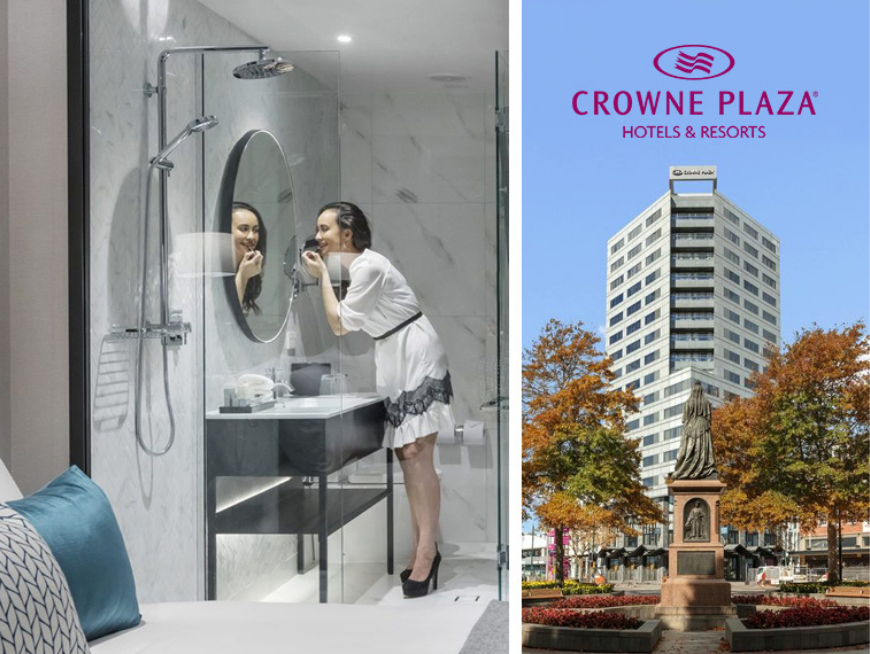
Robertson's collaboration with the Cordis Pinnacle Tower is a recent example of Zucchetti at hospitality scale, where the brand's tapware was specified alongside Victoria+Albert baths to create a bathroom environment that balanced design elegance with practical performance. The Zucchetti Savoy collection - designed by Matteo Thun and Antonio Rodriguez with a "classic versus contemporary" design language and multiple handle options - is particularly well-suited to hotel specifications where design richness and flexibility across room types are both required.
Elementi offers an alternative design language within Robertson's premium range, with a considered Italian aesthetic that works across contemporary and transitional interior schemes. Elementi has been specified alongside Zucchetti and Parisi in hotel projects where a balance of style and practicality was the brief - a combination that demonstrates the compatibility of Robertson's ranges across a single property when different areas call for different product families.
Both ranges are available across the full spectrum of tapware required for a complete hotel specification: basin mixers in wall-mounted, 1-tap-hole and freestanding configurations, kitchen mixers, shower mixers, and, critically for hospitality, thermostatic mixer systems.
Thermostatic mixers: compliance and safety in hospitality settings
Thermostatic control in hotel showers and baths is not simply a comfort feature; in many hospitality settings, it is a safety requirement. Building Code temperature limits for hot water delivered to fixtures used for personal hygiene are stricter for certain building types, and the risk of scalding in a hotel setting, where guests of all ages, including children and the elderly, are using shower facilities they are unfamiliar with, makes precise temperature control a genuine duty of care.
Robertson's thermostatic mixer range addresses both the safety and the specification requirements for hospitality. Thermostatic valves maintain a consistent, pre-set outlet temperature regardless of fluctuations in the incoming hot or cold water supply, delivering a predictably safe and comfortable shower experience for every guest, without requiring them to adjust the temperature themselves. Every thermostatic mixer in Robertson's current range is fully compliant with G12/AS1 Amendment 14.
For hotel specifications, thermostatic systems also offer a practical operational benefit: reduced maintenance calls relating to water temperature complaints, and a consistent experience across the property regardless of time of day or hot water system load.
-1785448658-COPY.png)
Documentation and project support for large-scale hospitality projects
Robertson's approach to hospitality specification goes well beyond product supply. For large-scale projects, the team provides structured support across the full specification and procurement process.
Project-level SDoc management. Rather than requiring a project manager to chase compliance documentation product by product, Robertson can provide SDocs for every tapware product in a hospitality specification as a consolidated document set, structured for building consent purposes and formatted for easy reference by the facilities management team.
Staged delivery coordination. Hotel fit-out programmes typically involve staged delivery requirements - tapware for different room types, different floors, or different phases of the project arriving at different times. Robertson's distribution team works with project managers to align delivery schedules with the programme, reducing the risk of on-site storage issues and ensuring the right product is available at the right stage.
Substitution risk management. If a specified product becomes unavailable during a long project programme, Robertson's architectural team can identify and document a compliant, aesthetically equivalent alternative, with updated compliance documentation, before the issue affects the programme.
Technical and installation support. Robertson's technical team is available for installation queries, pressure and flow compatibility questions, and post-installation troubleshooting, supported by Robertson Trade's extensive spare parts capability for ongoing maintenance needs.
-1785448684-COPY.png)
A note on project examples
Robertson Bathware has supplied tapware and bathroom products to some of New Zealand's most recognised hospitality developments. We are working with our architectural team to develop a dedicated case study series that will showcase specific projects, with appropriate client permissions, in more detail than is possible here.
If you are a hotel developer or project manager considering Robertson for an upcoming project and would value a conversation with the team about their experience on comparable developments, we would welcome that conversation directly. Robertson's architectural consultants across New Zealand have hands-on experience with hospitality specification at every scale, from boutique properties to major urban hotel developments.
-1785448709-COPY.png)
Starting the conversation early
The most effective hospitality tapware specifications are the ones where the supplier is engaged early - at the design development stage, not the procurement stage. Early engagement allows the product selection to be coordinated with the interior design and finishes schedule, compliance documentation to be built into the consent package from the outset, and delivery logistics to be planned into the programme rather than retrofitted.
Robertson's architectural and design consultancy team is available for early-stage project conversations across New Zealand, whether that is a formal specification review, a product presentation for the design team, or a discussion about compliance documentation requirements for building consent.
Every tapware product in Robertson's current range is fully compliant with G12/AS1 Amendment 14 - lead-free, DZR brass throughout, with SDocs available for every product. For hospitality projects where compliance is non-negotiable and design quality is equally so, that combination is where the Robertson conversation starts.
Talk to a Robertson architectural consultant about your hospitality project →
Explore Robertson's compliant tapware range →
Thermostatic mixers for hospitality →
Robertson Bathware has been supplying premium tapware and bathroom products to New Zealand's hospitality sector for over 40 years. Our architectural and design team works with hotel developers and specifiers from early-stage concept through to post-installation support. Contact our team to discuss your next project.