The Specifier's Guide to G12/AS1 Amendment 14 Tapware Compliance
Monday 15 June 2026
The new lead-free and DZR brass requirements that came into force on 2 May 2026 represent the most significant update to New Zealand's potable water tapware standards in a generation. For architects, interior designers, project managers and quantity surveyors, the change is not just a product procurement question; it ripples through specification documents, consent applications, procurement schedules and on-site management processes.
This guide is written for specifiers. It assumes you already understand the basics of what changed (if not, our plain-language overview of the DZR requirement and the original compliance announcement cover that ground). What it focuses on is the practical workflow: what you now need to specify, how to handle documentation, what to do when a substitution is proposed, and how Robertson's team can support you through the process.
What changed, and when - the brief version
From 2 May 2026, G12/AS1 Amendment 14 became the only MBIE Acceptable Solution for building consent applications under Building Code Clause G12 (Water Supplies). Any consent lodged on or after that date must use products that meet two new requirements:
- Lead-free: Copper alloy products in contact with potable water must have a weighted average lead content of no more than 0.25%
- DZR brass: Copper alloy components subject to hydrostatic pressure in the potable water system must be made from dezincification-resistant copper alloy
The change applies to a wide range of products - basin mixers, kitchen mixers, thermostatic valves, angle stops, pressure-reducing valves and copper alloy pipe fittings. It does not apply to shower heads, open bath spouts, toilets, baths, or systems outside the potable water supply.
What architects and designers need to include in specifications now
The most immediate change for the specification process is that generic tapware specifications are no longer sufficient. Specifying "chrome basin mixer to approval" and leaving product selection to the contractor creates downstream compliance risk that can fall back on the design team.
The safer and now standard-of-care approach is to specify products, or product categories, that explicitly meet the Amendment 14 requirements, and to include compliance documentation requirements in your contract documents.
In your specification, consider including:
- An explicit statement that all copper alloy tapware and fittings in contact with potable water must comply with G12/AS1 Amendment 14
- A requirement that the weighted average lead content does not exceed 0.25%
- A requirement that all components under hydrostatic pressure are manufactured from DZR brass
- A requirement that the contractor provide a Supplier's Declaration of Compliance (SDoc) for all tapware products prior to practical completion
- A requirement that products carry LF and DR markings as evidence of compliance
Where projects use a performance specification approach, the specification should reference Amendment 14 directly and require that all proposed products comply with it as a minimum.
James Robertson, General Manager Distribution here at Robertson Bathware, works closely with specifiers across New Zealand and has seen the specification gap that can emerge when compliance requirements are left implicit. "The projects that go smoothly are the ones where the architect has been specific upfront," he says. "When the specification says 'must comply with G12/AS1 Amendment 14 and SDoc to be provided', there is no room for a contractor to propose something that doesn't make the grade. Vague specs create the space for vague product choices."
You can read more about James and the Robertson team at robertson.co.nz/our-people.
How to request and manage compliance documentation
There are three primary forms of compliance evidence you will encounter:
Supplier's Declaration of Compliance (SDoc)
The SDoc is the cornerstone document for Amendment 14 compliance. It is a formal declaration by the product supplier confirming that a specified product meets the relevant requirements, in this case, the lead-free and DZR requirements of G12/AS1 Amendment 14. SDocs should reference the specific product model and SKU, the standard being met, and the basis for the declaration (typically third-party test results or international certification).
Robertson Bathware can provide SDocs for every product in the current tapware range. If you are building a project compliance register, our team can supply these in bulk for an entire specification.
LF and DR markings
Compliant products will carry LF (lead-free) and DR (dezincification-resistant) markings on the product or its packaging. These are the on-site verification markers that allow plumbers, inspectors and project managers to confirm at the point of installation that the right product has arrived. Include a requirement for these markings in your specification so that the delivery verification process has something concrete to check against.
International certification
Many European-manufactured tapware products carry WRAS (Water Regulations Advisory Scheme, UK) or equivalent certification. These standards are generally equivalent to or exceed the NZ requirements for both lead content and DZR compliance. Where a product carries current WRAS or equivalent certification, this provides a strong basis for compliance confidence.
Managing your compliance register
For larger projects - hotels, apartment developments, healthcare facilities - maintaining a compliance register is strongly advisable. This is a project-level document that records, for each specified tapware product:
- Product name, model and SKU
- Supplier
- SDoc reference and date
- LF and DR marking confirmed
- Installer name and installation date
This register protects the design team, simplifies the building consent inspection process, and provides an auditable record that the project met the required standard.
Managing substitutions - the risk specifiers need to control
Substitutions are where compliance risk concentrates on most projects. A contractor proposes an alternative product, often on cost grounds, and if the specification and contract documents are not explicit about compliance requirements, there is a pathway for non-compliant products to enter the project.
Under Amendment 14, this risk carries real consequences. MBIE is clear that installed products must comply with the Building Code at the time of installation. A non-compliant product identified at inspection can result in failed consents, costly remediation, and reputational damage for everyone involved in the project.
How to manage substitution risk:
First, specify that any proposed substitution must be accompanied by an SDoc and must carry LF and DR markings. This places the compliance burden on the proposer, not on the design team to investigate.
Second, include a provision in contract documents that substitutions will only be considered if they demonstrably meet or exceed the compliance requirements of the specified product.
Third, build a review step into your project programme for substitution requests; do not allow substitutions to be accepted and installed before the compliance documentation has been reviewed.
"The substitution question is where we get the most calls from architects," says James Robertson. "A contractor proposes something cheaper, the architect is not sure if it complies, and they need an answer quickly. Our advice is always to make the compliance requirement explicit in the spec from day one. That way, the only products that get proposed are ones the contractor is confident will pass. It changes the conversation before it even needs to happen."
Project type guide: what to specify and where
Robertson's compliant tapware range spans the full project spectrum. The following is a guide to the most relevant product categories by project type.
Hotels and boutique accommodation
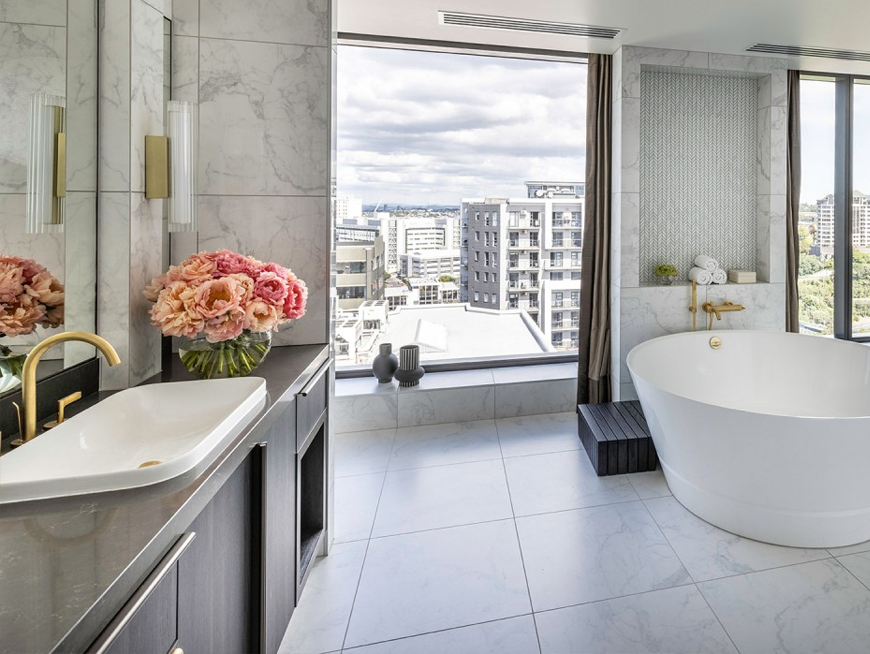
Hotel projects have a dual compliance challenge: every tapware product across potentially hundreds of rooms must comply, and the product choice still needs to deliver the guest experience the brand demands. Robertson's Zucchetti and Elementi ranges address both.
For hotel bathrooms, wall-mounted basin mixers and 1 tap hole basin mixers from both ranges are fully compliant and available across multiple finishes - chrome, brushed nickel, matte black and brushed brass - to match project aesthetics. For ensuites or bathrooms with temperature-sensitive requirements, thermostatic mixers provide both compliance and the precise, safe temperature control that hotel operators need.
Multi-unit residential developments
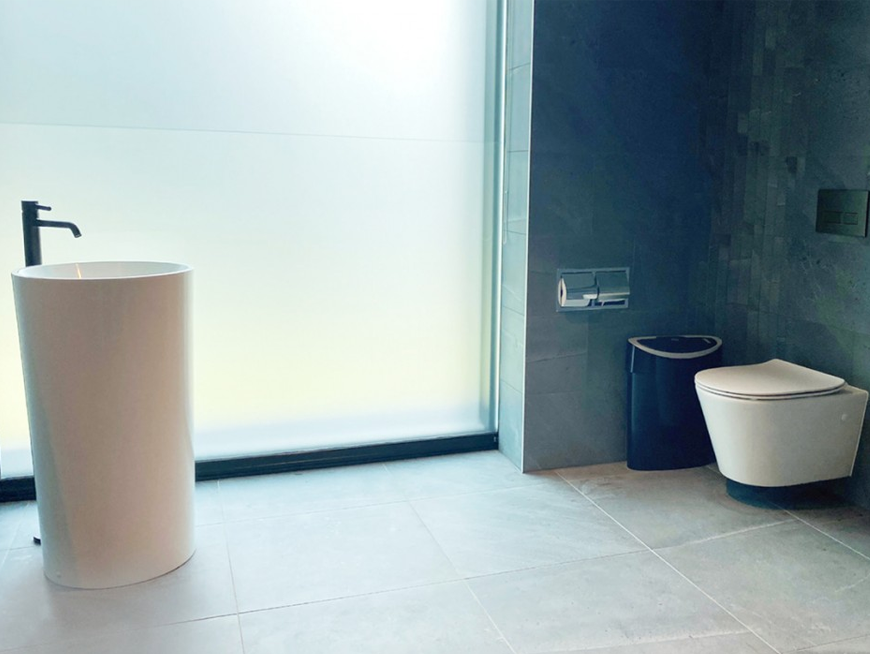
Volume and consistency are the priority here. Specifiers on apartment and townhouse projects benefit from choosing a Robertson range that can cover multiple product types - basin mixer, kitchen mixer, shower mixer - in a consistent finish and family, reducing the number of SDocs to manage and simplifying the site delivery process.
The Elementi Due range, which includes basin mixers, an extended height mixer and a kitchen mixer with pull-out spray, offers this kind of specification coherence across common areas and individual units alike.
Healthcare and aged care
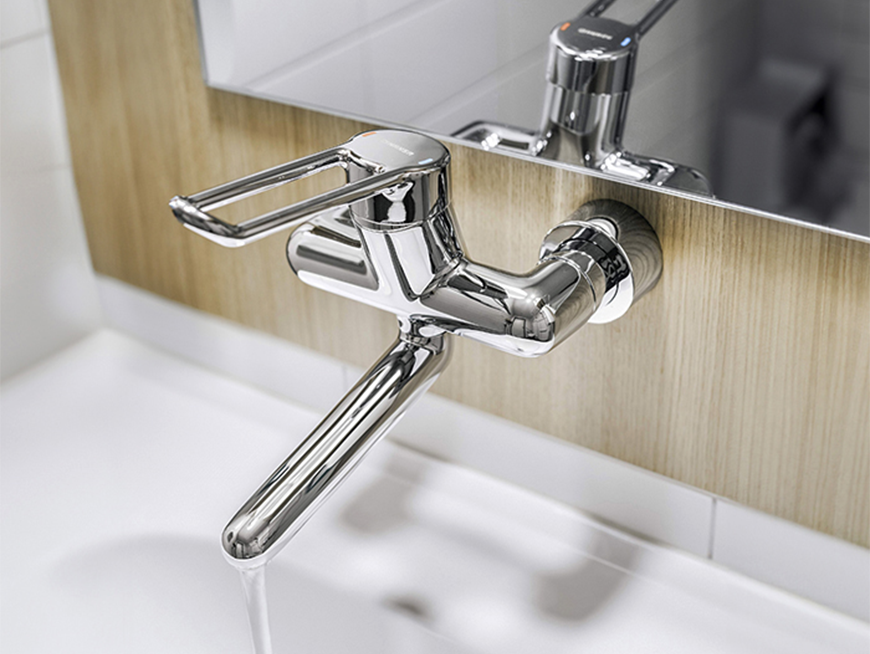
Healthcare environments have the strictest requirements, and tapware compliance is part of a broader infection control and patient safety framework. Extended height basin mixers and Robertson's healthcare and accessible mixer range are designed for these environments, compliant with Amendment 14, and with product characteristics suited to accessible design requirements.
For healthcare projects, thermostatic controls are often specified alongside the tapware to manage scalding risk. Robertson's thermostatic range integrates with the broader tapware specification and is fully compliant.
Commercial fit-outs and public facilities
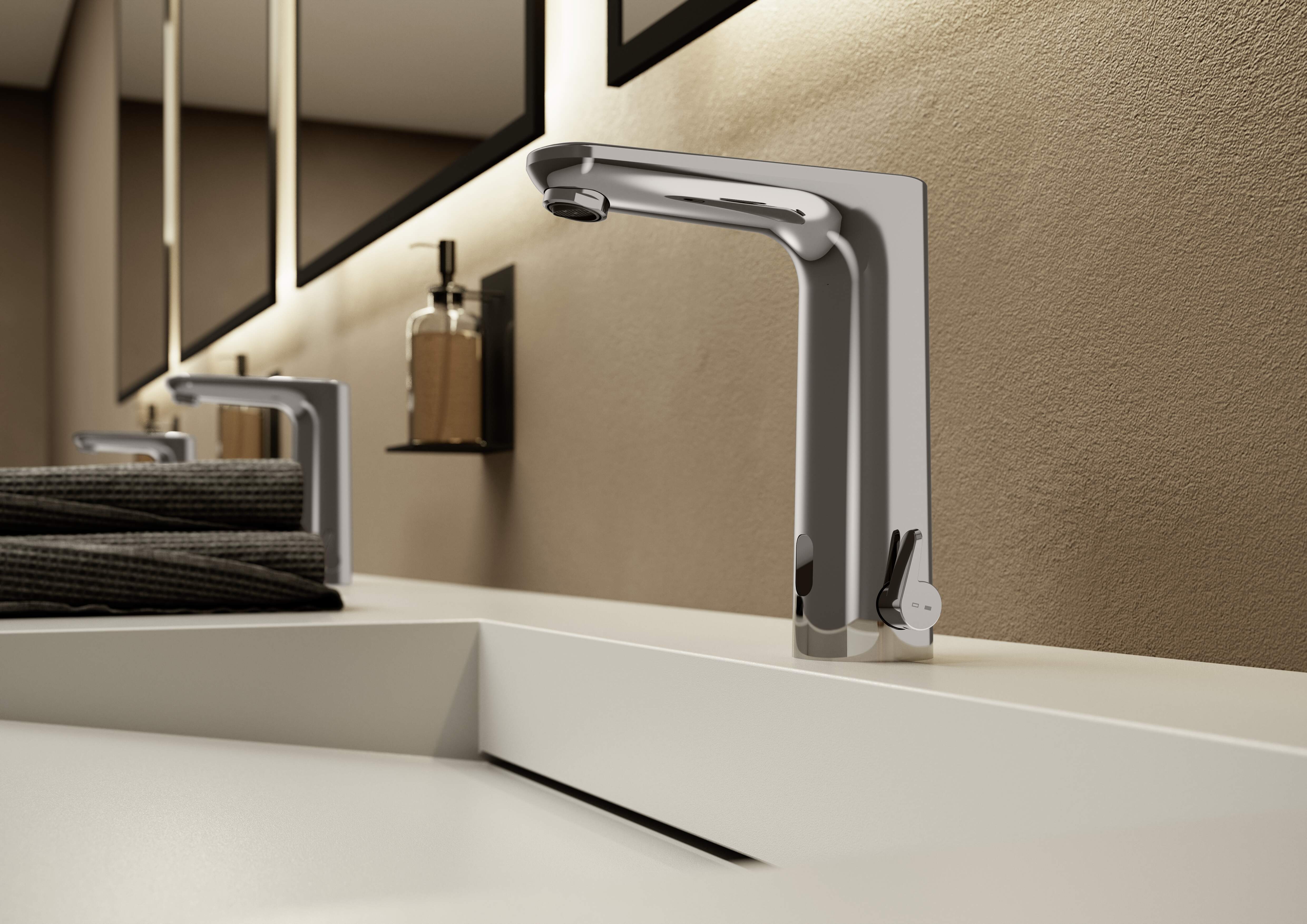
Sensor mixers are increasingly the default for commercial bathrooms, amenity spaces and public facilities, for both hygiene and water efficiency reasons. Robertson's sensor mixer range is fully compliant with Amendment 14 and suitable for high-frequency-use commercial environments.
For commercial projects, the compliance documentation requirement is particularly important - facilities managers and building owners will often request an ongoing compliance record for asset management purposes. Robertson can provide documentation structured to support this.
How Robertson supports specifiers
Robertson Bathware's architectural and design team works with specifiers at every stage of a project, from early product selection through to documentation support and on-site queries.
Specifically, Robertson can provide:
- Product specification support: Assistance in selecting the right product for each space, with confirmation of compliance status for every recommendation
- SDoc supply: Compliance documentation for any Robertson tapware product, provided promptly and in a format suitable for building consent applications and project records
- Substitution assessment: If a contractor proposes an alternative to a Robertson product, our team can assist in assessing whether the documentation provided meets the required standard
- Sample supply: Physical samples for client and design team review prior to specification confirmation
- Regional representation: Robertson has architectural consultants across New Zealand - if you are working on a project outside Auckland, your regional consultant can support your project directly
"Our role with specifiers is to make the compliance and selection process as low-friction as possible," says James Robertson. "The architect should be spending their time on design, not chasing documentation or trying to decode certification markings. That is our job, and we take it seriously."
Quick reference: specification checklist for architects
Use this as a starting point for any project where tapware is specified for potable water contact:
- Specification references G12/AS1 Amendment 14 explicitly
- Lead content requirement (≤0.25% weighted average) stated
- DZR brass requirement stated for all components under hydrostatic pressure
- SDoc required from contractor prior to practical completion
- LF and DR markings required on delivered products
- Substitution clause includes compliance documentation requirement
- Compliance register template prepared for the project
- Robertson architectural consultant engaged for product selection support
Conclusion
Robertson Bathware's current tapware range is fully compliant with G12/AS1 Amendment 14 - every product, no exceptions. Whether you are in the early stages of a hotel specification or reviewing a substitution request on a live project, our architectural team is available to help.
Talk to a Robertson architectural consultant about your project →
Robertson Bathware has supplied quality tapware to New Zealand homes and projects for over 40 years. For compliance documentation, specification support or product enquiries, contact your regional Robertson representative or reach out through the website.