Bathroom Vanities: Style vs. Storage - Making the Perfect Choice for Your Space
Thursday 12 February 2026
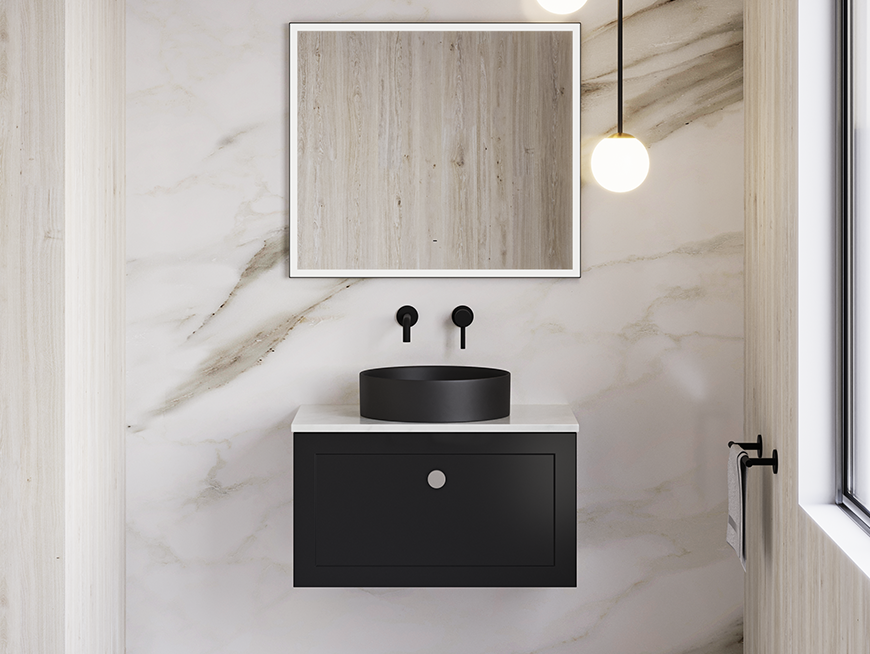
Bathroom vanities sit at the intersection of bathroom cabinet, furniture and interior design - they dictate how your morning flows and how calm your space feels at the end of the day. For DIYers in New Zealand comparing bathroom vanities NZ wide, the real challenge is not just picking a look, but striking the right balance between visual impact and practical storage.
Below, we break this decision into clear sections so you can scan by topic or read end to end.
Vanity style trends 2026
Bathroom trends for 2026 show a shift toward lighter, more open-looking spaces, with vanities treated as statement furniture pieces rather than purely utilitarian boxes.
Key trends:
- Floating and slimline vanities Wall hung or “floating” vanities are widely tipped as one of the biggest bathroom furniture trends for 2026 because they instantly make rooms feel more spacious and elevated. Exposing more floor area tricks the eye into reading the room as larger, especially when the same tile runs uninterrupted under the vanity.
- Warm natural finishes and texture Interior design forecasts show increased use of timber tones, ribbed fronts and textured laminates; these add warmth and depth to otherwise simple forms. Elementi and Parisi vanities lean into this with furniture like profiles and timber effect finishes that read more like living room furniture than traditional built-in cabinets.
- Minimal clutter, smarter storage Designers emphasise “hidden order” - clear benches and internal organisation that keeps products out of sight but within reach. Deep drawers, internal dividers and tall cabinets are replacing open shelving in many bathrooms, particularly where families share one space.
Taken together, the direction of travel is clear; vanities must look like design pieces from the front and behave like hard working storage systems behind the doors.
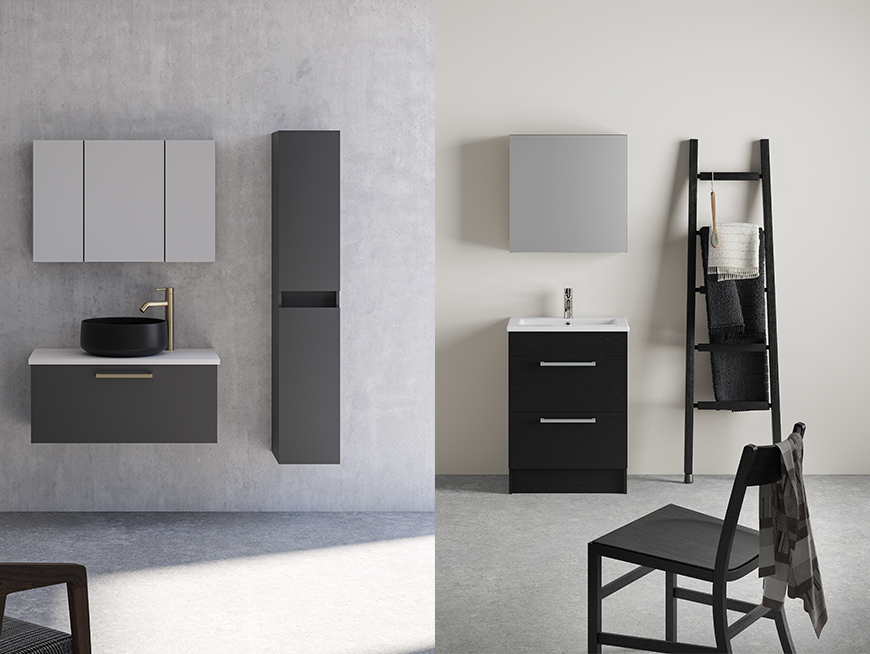
Wall hung vs freestanding vanities
Choosing between wall hung vs freestanding vanities is one of the most important decisions in small and medium bathrooms. Each has strengths depending on your space, plumbing layout and storage expectations.
Practical comparison
| Feature | Wall hung vanity | Freestanding vanity |
| Visual impact | Feels lighter and more contemporary; exposes more floor. | Feels substantial and traditional; reads like solid furniture. |
| Small bathroom performance | Excellent for small bathroom vanity ideas; it increases perceived space and airflow. | Strong storage potential, but can visually crowd tight rooms. |
| Cleaning and maintenance | Easier to clean the floor under the cabinet and reduce “dust traps”. | Bottom edges can trap moisture and dust in corners. |
| Storage capacity | Can be slightly reduced if the unit is very shallow or short; often offset by deep drawers. | Usually maximises volume from floor up; good for high-storage households. |
| Installation considerations | Requires solid wall fixing and planning for visible traps and valves if exposed. | Can sit on existing floors with fewer wall constraints, but needs careful detailing to avoid moisture wicking into legs or plinths. |
Wall-hung options from brands like Elementi give you modern lines plus strong storage, especially when paired with tall side cabinets in the same finish. Freestanding units can still look contemporary when you choose simple fronts and integrate them with matching mirrors and storage towers.
Space optimisation strategies
Smart interior design treats every centimetre around the vanity as an opportunity. This matters most in typical New Zealand homes, where family bathrooms often have modest footprints.
Pro strategies:
- Use vertical space Tall bathroom cabinets and wall units above or beside the vanity multiply storage without stealing floor area. This is especially effective when drawers hold daily items and overhead cabinets store bulk products and towels.
- Right size the vanity to the room Oversized vanities in narrow rooms can choke circulation and make cleaning harder. Designers often recommend leaving at least 700 to 800 mm clear in front of the vanity for comfortable use and allowing a visual margin to adjacent walls so the unit does not feel crammed.
- Align plumbing with layout Where possible, centre the basin and drawers around existing services to minimise re-plumbing. For wall-hung units, check stud positions and nogging so the cabinet is fully supported - particularly important for heavier stone tops from premium ranges.
- Coordinate mirrors and lighting Mirrored bathroom cabinets above the vanity can double as storage for smaller items and amplify light, which again helps small rooms feel larger.
Elementi and Parisi offer modular vanity and storage combinations so you can build up a full furniture wall that looks cohesive while using every available vertical zone.
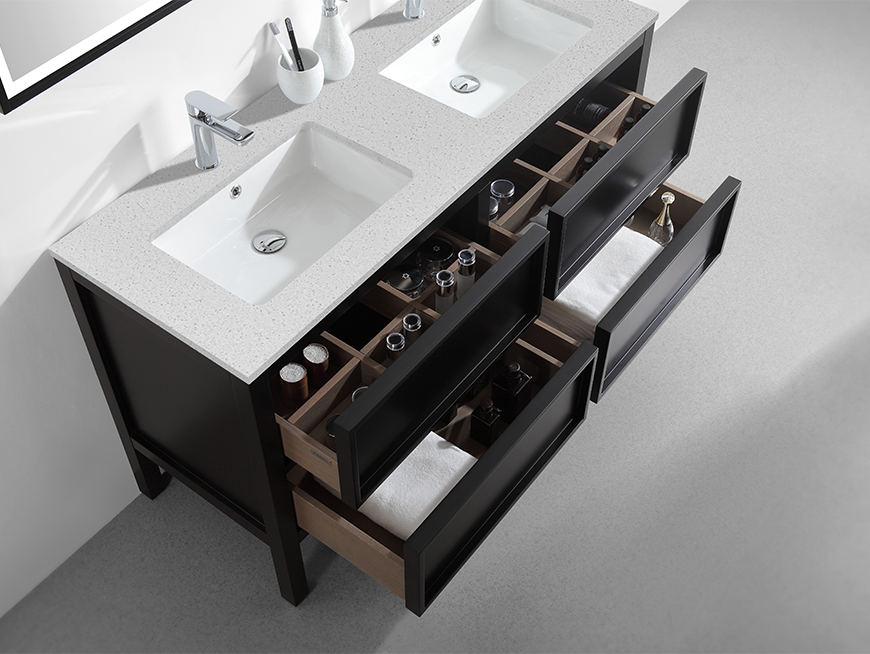
Storage solutions for small bathrooms
Small bathroom vanity ideas in 2026 are less about shrinking everything and more about smarter bathroom cabinet design.
Research on bathroom cabinet storage notes that using vertical space, multiple compartments and easy access hardware dramatically improves user experience in compact rooms. Effective strategies include:
- Deep, full extension drawers Drawers that pull right out allow you to see everything at a glance and prevent “lost” products at the back. Internal organisers or adjustable dividers keep everyday items upright and separated.
- Zoned storage Group items by activity; for example, the top drawer for daily skincare, the second drawer for hair tools, and the lower sections for towels and cleaning products. This zoning speeds up busy morning routines and reduces bench clutter.
- Recessed mirrored cabinets Where wall depth allows, recessed mirror cabinets above the vanity provide storage without projecting into the room, which is valuable in tight walkways.
- Open shelves used sparingly Open shelves are popular visually, but can quickly look messy and collect dust. Designers recommend using them for a few styled items while keeping the bulk of storage hidden behind doors and drawers.
When you couple these tactics with a wall-hung vanity, you get the illusion of a larger floor plan plus the functionality of a much bigger cabinet.
Material durability - engineered wood vs solid timber
Bathrooms are high-moisture environments, so material choice in vanities is about more than looks. Both engineered wood and solid timber can perform well if correctly specified and sealed, but they behave differently.
How moisture affects vanity materials
- Solid wood is prized for natural grain and repairability but is more susceptible to dimensional movement under changing humidity - it can warp, swell or crack if not well protected.
- Engineered wood products such as quality plywood or MDF with veneer are built from cross-laminated layers that counteract expansion and contraction. This increases dimensional stability and reduces the risk of doors twisting or tops cupping in the steamy conditions common in bathrooms.
Studies in hospitality and cabinet making contexts note that high grade engineered wood often delivers better moisture resistance and long term stability than solid timber in wet environments, provided the finish is high quality and edges are sealed.
What this means for bathroom vanities NZ
- Engineered wood advantages
- High-quality plywood or moisture-resistant MDF with durable laminates or 2-pack finishes typically offers strong resistance to everyday steam and splashes.
- Less prone to seasonal movement, which helps keep drawer runners aligned and door gaps consistent over time.
- Solid timber advantages
- Authentic grain and the ability to sand and refinish if damaged, especially on premium furniture style pieces.
- May suit heritage or bespoke projects where patina is valued more than absolute stability.
The quality of the finish is crucial in both cases - experts emphasise that sealants, paints and varnishes provide the first line of defence against moisture, so cheap coatings can undermine even good substrates. Brands like Elementi and Parisi are engineered specifically as bathroom furniture, not repurposed general cabinetry, which gives you a better foundation for durability.
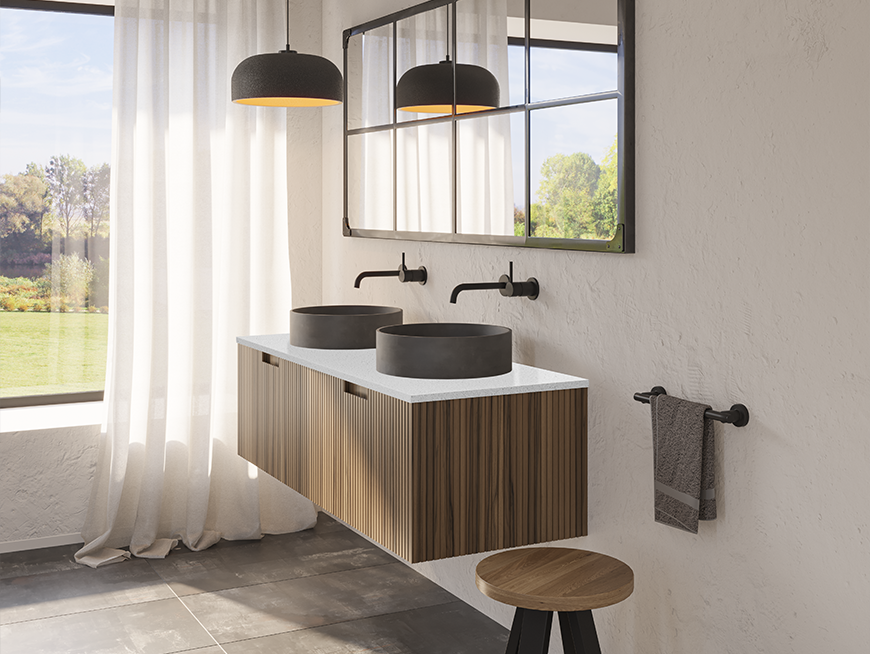
Finish matching guide
A bathroom vanity sits within a broader palette of furniture, fixtures and finishes. Matching or thoughtfully contrasting surfaces makes the room feel professionally designed.
Guidelines:
- Coordinate with tapware and hardware If you are using warm metallic tapware, such as brushed brass, opt for vanities in warmer timber tones or neutral matte finishes so the metals feel intentional rather than random. Cool-toned chrome and stainless pair well with white, grey and cooler timber stains.
- Relate to floor and wall tiles Floating vanities that reveal more flooring benefit from continuity; repeating the floor tone in the vanity or choosing a finish that gently contrasts avoids visual clutter. For example, soft oak cabinetry against light stone tiles can read as calm and cohesive.
- Use furniture logic Treat the vanity as you would lounge furniture. Interior design guidance suggests that mixing a maximum of two or three key timber tones in one space keeps the scheme controlled. Elementi and Parisi ranges often include matching tall units and mirrors so you can run a single finish across all bathroom furniture.
- Consider long term flexibility Highly patterned or very dark finishes can date faster than neutral, textured options. Many homeowners now choose balanced, natural-looking vanities and introduce colour and pattern through paint, towels and accessories that are easier to change.
Robertson’s curated Elementi and Parisi collections are designed so you can line up vanities, storage towers and mirror cabinets in one finish to create a cohesive furniture wall that feels tailored rather than pieced together.
Conclusion
Whether you are planning a simple weekend refresh or a full bathroom transformation, the right vanity choice will shape how stylish, spacious and stress-free your everyday routine feels. If you would like tailored advice on balancing style and storage, or want to see how Elementi and Parisi vanities could work in your own layout, get in touch with the team at Robertson for design inspiration and practical ideas that fit your space, budget and future plans.
FAQs - Bathroom vanities NZ
What size vanity is best for a small bathroom?
In small bathrooms, designers typically recommend a compact wall hung vanity that leaves clear floor around the unit and uses drawers instead of deep cupboards. This improves both circulation and storage efficiency, making the room feel larger than its footprint suggests.
Are wall-hung vanities strong enough for family use?
Yes, provided they are properly fixed into solid framing or suitable wall anchors and designed as bathroom furniture. Floating vanities are widely used in family bathrooms and even hotels because exposing the floor makes cleaning easier without sacrificing storage when internal design is well planned.
Is engineered wood better than solid timber in bathrooms?
High-grade engineered wood, such as quality plywood or moisture-resistant MDF with robust finishes, is often more stable and moisture-resistant than solid timber in humid environments. Solid wood can perform well but is more prone to movement and requires particularly careful sealing and maintenance.
How do I maximise storage in a small vanity?
Use deep, full extension drawers with internal dividers, add vertical storage with tall cabinets or mirrored wall units and reserve open shelves for a few frequently used or decorative items. Zoning storage by task also reduces bench clutter and speeds up daily routines.
What is the difference between a bathroom cabinet and a vanity?
A bathroom cabinet is any storage unit designed for the bathroom, such as wall units, tall cupboards or mirror cabinets. A vanity is a specific type of bathroom cabinet that integrates a basin, benchtop and storage into one piece of furniture. Vanities from brands like Elementi and Parisi combine both roles by offering coordinating cabinets in the same finishes.
How do I match my vanity to the rest of my interior design?
Start by identifying whether your home leans warm or cool in its colour palette and choose vanity finishes that echo existing timber tones or key metals like tapware. Treat the vanity as part of your furniture story and limit the number of different wood looks in one room to keep the scheme calm and cohesive.
Why choose Elementi or Parisi vanities via Robertson?
Elementi and Parisi are purpose-designed as bathroom furniture with moisture-appropriate materials, well thought out storage and finishes that reflect current interior design trends. Buying through Robertson gives you access to these curated ranges plus local expertise on sizing, installation and pairing vanities with matching mirrors, cabinets and fixtures.