Small Bathroom Trends for 2026: Space-Saving Ideas for New Zealand Homes
Friday 26 June 2026
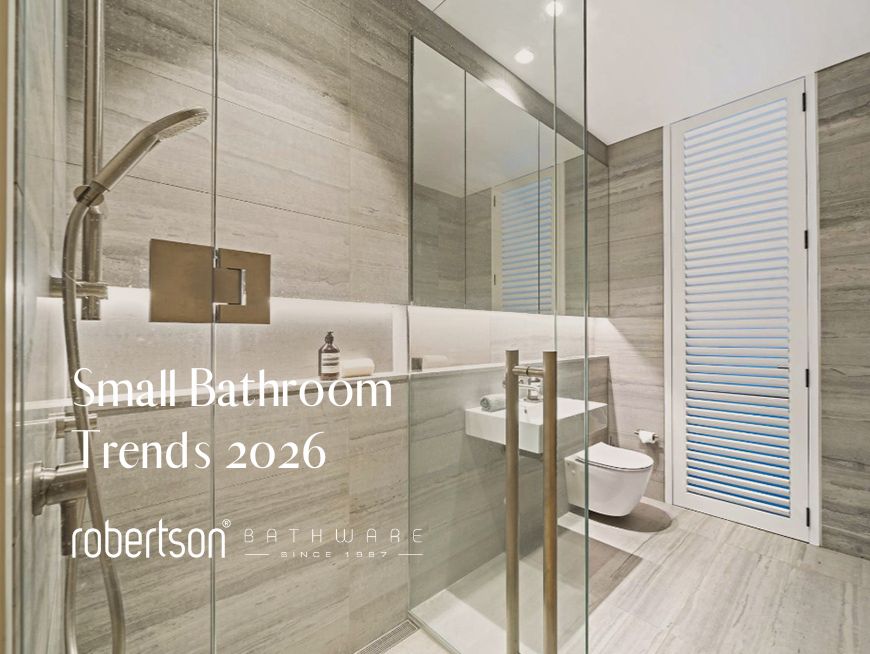
In New Zealand, urban living is evolving. Whether you are renovating a compact villa ensuite in Ponsonby, updating a family bathroom in Christchurch or planning a modern apartment bathroom in Wellington, space is often at a premium.
A smaller footprint does not mean compromising on comfort, functionality or a considered design. In fact, compact bathrooms can be some of the most rewarding spaces to design. With the right layout, finishes and fixtures, even a small bathroom can feel calm, refined and luxurious.
Looking towards 2026, bathroom design is moving towards sensory minimalism. This approach combines clean, space-saving layouts with warm finishes, tactile surfaces and thoughtful details that make the room feel inviting rather than clinical.
Here are five key small bathroom trends for 2026, along with practical ideas for bringing them into your own home.
1. The Floating Aesthetic
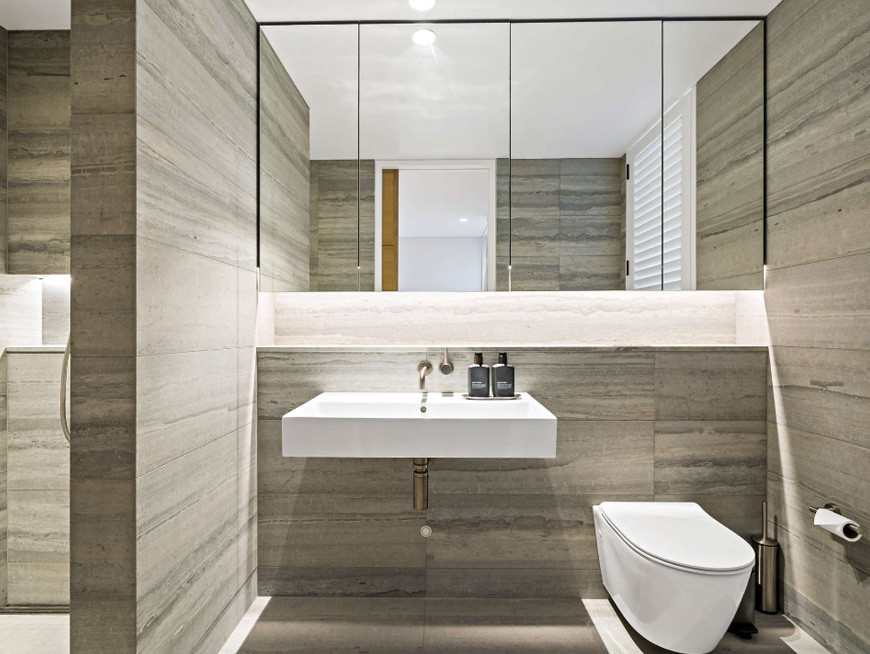
Wall-hung fixtures continue to be one of the most effective ways to make a compact bathroom feel more open.
By lifting furniture and sanitaryware off the floor, you create more visible floor area. This helps the room feel lighter and less crowded, while also making cleaning around the bathroom easier.
A wall-hung vanity is particularly effective in a narrow ensuite or apartment bathroom. Choose a proportionate size for the room, such as a 600 mm vanity for a smaller layout, and consider a mirrored cabinet above to introduce useful storage without taking up valuable bench space.
Wall-hung toilets can also help create a cleaner, more streamlined look. An in-wall cistern keeps the tank concealed inside the wall, reducing visual bulk and allowing the bathroom to feel more refined.
For a compact room, the key is not simply choosing wall-hung products. It is choosing products with the right depth, width and clearance for the available space.
Small bathroom tip: Keep the floor finish continuous beneath wall-hung furniture wherever possible. This creates an uninterrupted visual line and helps the room appear larger.
2. Warm Metals and Brushed Textures
Cool chrome will always have a place in bathroom design, but 2026 is seeing a stronger shift towards warmer, more tactile finishes.
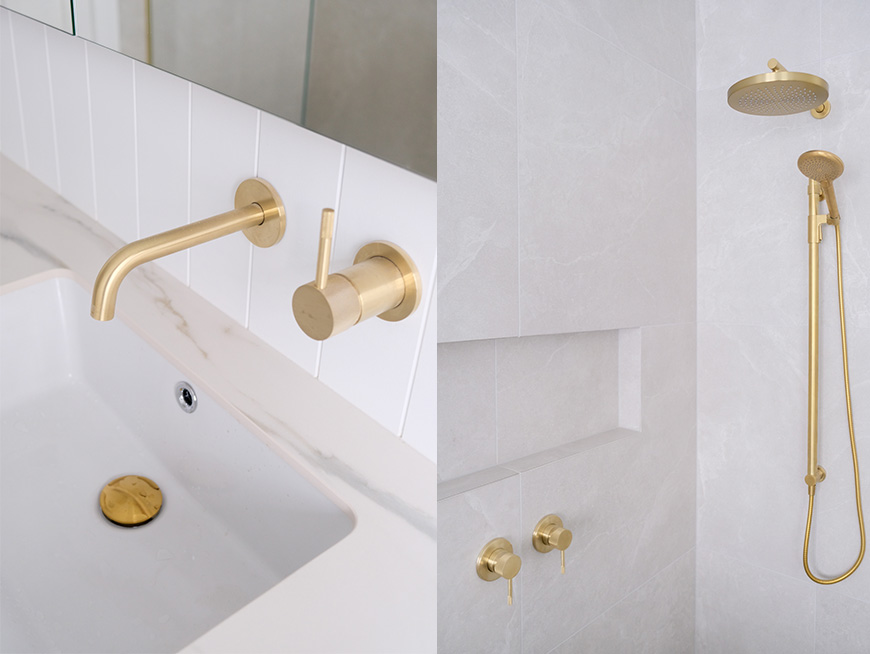
Brushed brass, gun metal, brushed nickel and brushed stainless steel introduce depth and softness without overwhelming a small room. These finishes work particularly well with natural stone, warm grey tiles, timber-look cabinetry and textured ceramic surfaces.
Warm metal tapware can also become a subtle focal point in a simple bathroom. A wall-mounted basin mixer, for example, keeps the vanity surface clear while creating a more architectural look around the basin.
Italian-designed collections such as Zucchetti Veloce and Pan offer refined proportions that work beautifully in smaller spaces. Their slim, carefully considered forms bring a premium design element to compact basins, powder rooms and ensuites.
For a more cohesive finish, repeat the same metal tone across tapware, shower fittings, towel rails, robe hooks and toilet roll holders.
Small bathroom tip: Select one main metal finish and carry it through the room. Too many finishes can make a compact bathroom feel busy.
3. The Walk-In Shower Approach
Bulky shower trays, large framing systems and heavily segmented glass can make a small bathroom feel more enclosed than it needs to.
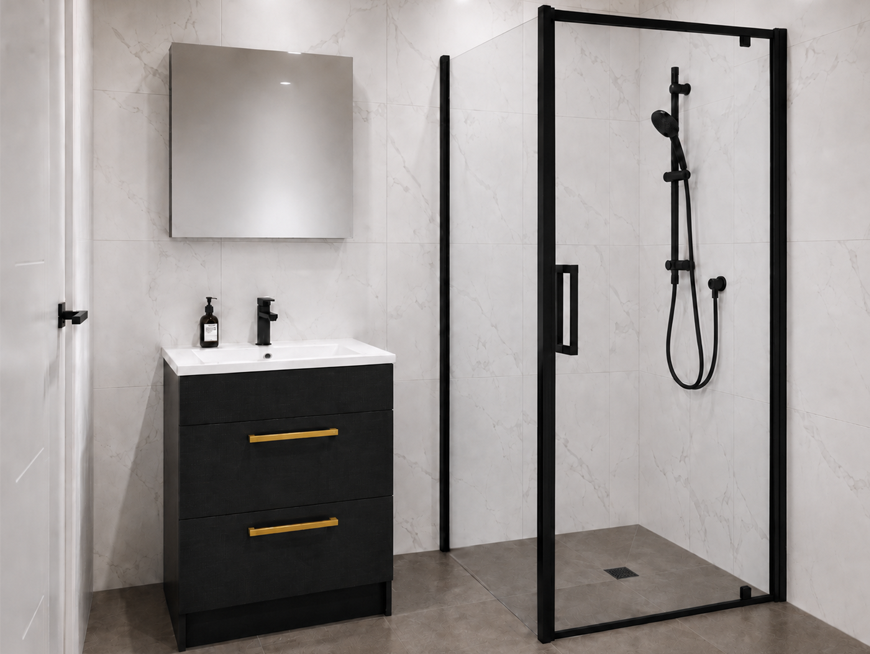
A floor-level walk-in shower with minimalist glass can create a cleaner visual flow between the shower area and the rest of the room. Continuous wall and floor tiling also helps the bathroom feel more spacious by reducing visual interruptions.
For many smaller layouts, a fixed glass panel or a tiled shower enclosure can be a practical way to keep the room feeling open while still containing water effectively. Clear glass allows the eye to travel through the room, making the bathroom feel wider and more considered.
A curbless shower can be an excellent option where the room has been designed and waterproofed appropriately. However, it is important to work with your designer, builder and installer to ensure drainage, fall and waterproofing requirements are correctly considered.
For bathrooms where a raised tray is preferred, a slim-profile shower tray can still achieve a modern, streamlined appearance.
Small bathroom tip: Use the same tile through the shower area and bathroom floor where practical. This creates a more seamless look and helps the space feel less divided.
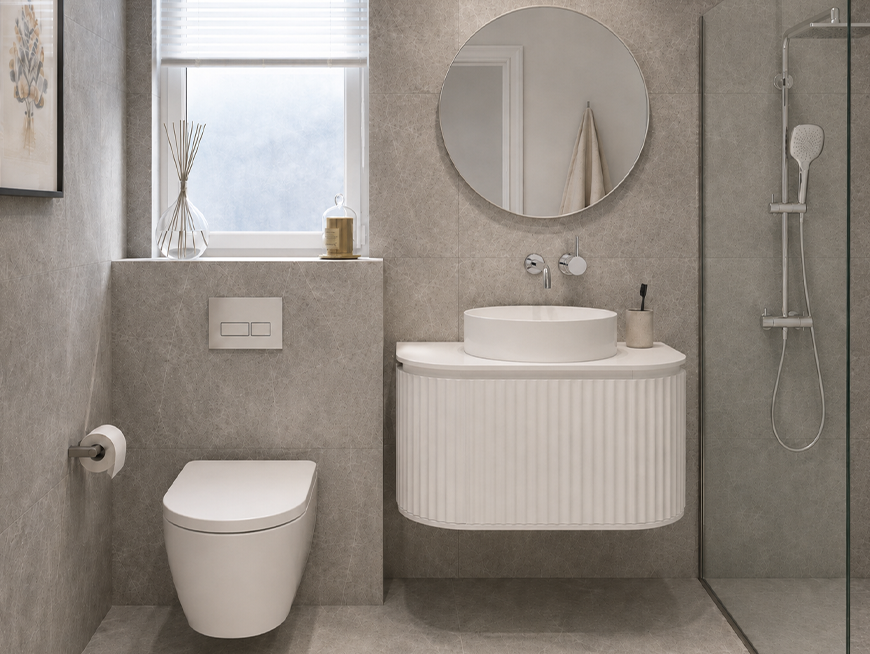
4. Fluted Details and Curved Edges
Small bathrooms often contain many hard lines, from wall tiles and cabinetry to shower glass and sanitaryware. Introducing softer forms can make the room feel more relaxed and visually balanced.
Fluted cabinetry, ribbed vessel basins, rounded mirrors and curved vanity edges are all becoming more popular in 2026. These details add texture and personality while keeping the palette calm and restrained.
A curved or fluted vanity can create a softer focal point in a small ensuite, while a round or arched mirror helps break up the straight lines of tiled walls and cabinetry.
Vessel basins are another effective way to introduce sculptural form, especially when paired with wall-mounted tapware. This combination can make a compact vanity feel more refined without requiring a large amount of bench space.
The best results come from restraint. Choose one or two tactile features, rather than layering fluting, heavy veining, bold colours and decorative lighting all in the same small room.
Small bathroom tip: A round mirror above a vanity can visually soften a narrow wall and help the space feel more open.
5. Smart Technology for Small Spaces
In a compact bathroom, every fixture needs to earn its place. Smart technology can help make the room more comfortable and efficient without adding unnecessary bulk.
Intelligent toilets and bidet seats are becoming increasingly popular for homeowners who want to introduce a more considered, wellness-focused bathroom experience. Features such as integrated cleansing, heated seats and adjustable settings can reduce the need for separate accessories while adding everyday comfort.
For small bathrooms, compact toilet forms and concealed cistern systems can be particularly useful. They help create a neater profile and make it easier to maintain a clean, uncluttered layout.
Technology can also extend to lighting, heated towel rails and mirrors. A well-positioned illuminated mirror or mirrored cabinet can improve task lighting at the vanity while adding depth to the room.
The aim is not to add technology for the sake of it. It is to choose products that make a small space feel easier to use, more comfortable and more considered every day.
Small bathroom tip: Prioritise integrated solutions. A mirrored cabinet, wall-hung toilet or multi-function shower system can provide more value than adding multiple standalone accessories.
Designing a Small Bathroom That Feels Bigger
The best compact bathrooms are designed around a clear layout first, then finished with thoughtful details.
Before choosing products, consider:
- The available wall lengths and door clearances
- Vanity width and depth
- Shower access and glass placement
- Toilet projection and circulation space
- Storage requirements
- Lighting and ventilation
- Tile scale and direction
- The finishes that will work together across tapware, cabinetry and accessories
A smaller bathroom does not need to feel limited. With the right combination of wall-hung fixtures, warm metal finishes, streamlined shower solutions, tactile details and intelligent storage, it can become one of the most functional and enjoyable rooms in the home.
Explore Robertson Bathware’s collection of vanities, basins, tapware, showers, toilets, mirrors and accessories to create a small bathroom that feels considered, spacious and distinctly your own.