Eco-Friendly Bathroom Fixtures: Sustainability Without Sacrificing Style
Friday 14 August 2026
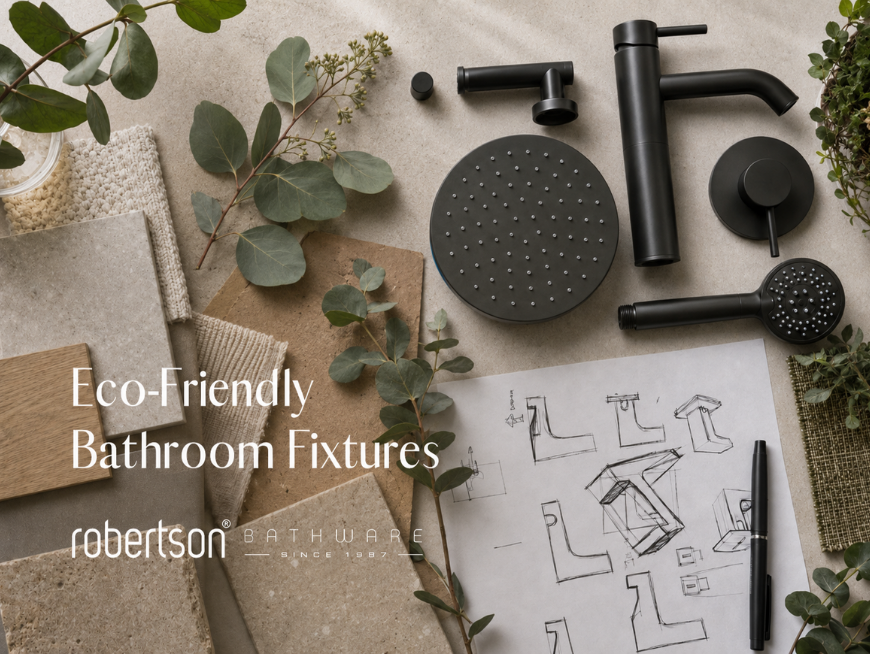
Sustainability and design used to feel like a trade-off in bathroom specification. Eco-friendly choices meant compromising on aesthetics, on durability, or on the guest or homeowner experience you were trying to deliver. That trade-off has largely dissolved. The most sustainable bathroom products available in New Zealand today are also, in many cases, the most beautiful.
This post brings together the full picture of what sustainable bathroom specification actually looks like in 2026, from water-saving technology and WELS ratings to eco-certified materials, green building certification, energy-efficient heating, and lifecycle cost analysis. Whether you are a hotel developer building a sustainability case for a new property, a homeowner renovating with the future in mind, or a designer helping a client make decisions that align with their values, this is the information you need to make those decisions well.
Water-saving technology: where the biggest gains are
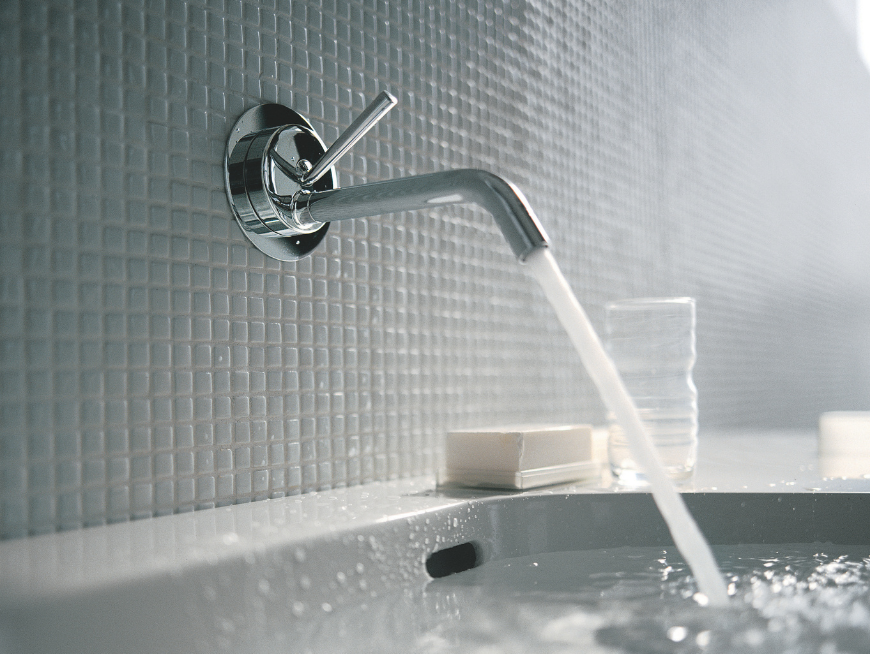
Water efficiency is the most measurable dimension of sustainable bathroom specification, and the one where individual product choices have the most direct and quantifiable impact.
The fundamental technologies at work in water-efficient tapware and shower products are aerators and flow restrictors - devices built into the product that introduce air into the water stream or limit the volume of water passing through, maintaining the feel of strong, full-coverage flow while using significantly less water per minute.
A standard, unrated tap can deliver 15 litres per minute or more. A high-efficiency 5 or 6-star WELS-rated mixer might deliver 4–6 litres per minute - less than half the volume, with no discernible difference in the washing or rinsing experience for most users. Over the lifetime of a tap used multiple times a day in a home, or dozens of times a day in a hotel bathroom, the cumulative water saving is substantial.
Shower water efficiency follows the same principle. An older shower head might deliver 12–15 litres per minute. A modern 3 or 4-star WELS shower head with pressure-compensating technology typically delivers 7–9 litres per minute while maintaining the immersive, high-coverage experience that shower users expect. For a hotel with 100 bathrooms, each shower used for an average of eight minutes per day, the difference between a low-rated and high-rated shower head across a year runs to millions of litres.
Toilets have their own efficiency equation: dual-flush systems, which allow users to select a full or half flush depending on need, typically achieve 3 or 4 WELS stars and represent the current standard for any new installation in New Zealand. Robertson's toilet range includes dual-flush options across multiple brands and configurations, from wall-faced to wall-hung and in-wall cistern systems.
James Robertson, General Manager Distribution at Robertson Bathware, sees water efficiency increasingly at the centre of the conversations his team has with specifiers. "The question used to be 'does it meet the minimum?' Now it's 'what's the highest rating we can achieve without compromising the experience?'" he says. "That shift reflects a genuine change in how both developers and end users think about sustainability - not as a constraint but as a quality indicator."
You can read more about James and the Robertson team at robertson.co.nz/our-people.
-1786680645-COPY.png)
Sustainable materials: the eco-story in your fittings and fixtures
Beyond water efficiency, the materials from which bathroom fixtures are made carry their own sustainability story - one that is increasingly relevant to green building certification, hotel ESG reporting, and the values of design-conscious homeowners.
Robertson's range includes two standout examples of genuinely sustainable material innovation at the premium end of the market.
Apaiser and apaiserMARBLE®
Apaiser's signature material, apaiserMARBLE®, is made from up to 90% reclaimed marble - a by-product of the marble industry that would otherwise contribute to landfill. During the finishing process, apaiser uses recycled water to limit consumption and minimal mechanisation to reduce greenhouse gas emissions.
The pieces contain minimal man-made ingredients, are non-toxic with no added silica and are free from aluminium trihydrate (ATH), and each piece is hand-finished in an ISO 9001 and ISO 14001 certified atelier. ISO 14001 is the international standard for environmental management systems - its presence in apaiser's manufacturing process is an independently verified signal of genuine environmental commitment, not a marketing claim.
The result is a bath or basin that is simultaneously one of the most beautiful and one of the most sustainably produced available in New Zealand. For hotel specifiers and homeowners who want their sustainability choices to be visible - in the design of the space itself, not just in a back-of-house document - apaiser bathware is exactly that. Robertson's apaiser range includes baths, basins and vanity tops across multiple collections.
Victoria + Albert and QUARRYCAST®
Victoria + Albert blends milled Volcanic Limestone™, a proprietary natural material formed when magma acts on soft, chalky limestone, with high-quality resins to create QUARRYCAST®, a world-class composite with an exceptional strength-to-weight ratio.
QUARRYCAST® combines the strength and rigidity of cast iron with the warmth and ease of use of modern materials, without surface coatings or layers to chip, delaminate, craze, yellow, wear through or rust. Minor scratches can be polished out, and the product is backed by a 25-year guarantee.
That 25-year guarantee is itself a sustainability statement. A bath that lasts a quarter century without needing replacement has a fundamentally better lifecycle environmental profile than a cheaper product replaced two or three times across the same period.
-1786680704-COPY.png)
WELS ratings and their role in green building certification
As covered in our earlier post on WELS and NZ Building Code compliance, WELS ratings provide the standardised efficiency benchmark for all water-using products in New Zealand. What that earlier post touched on but did not detail is how WELS ratings connect directly to New Zealand's green building certification frameworks.
Both Green Star (for commercial buildings, administered by the NZ Green Building Council) and Homestar (for residential buildings) include water efficiency credits that are influenced by the WELS ratings of specified fixtures and fittings. Green Star and Homestar certifications encourage the use of water-efficient fixtures and fittings, such as low-flow toilets, faucets and showerheads, designed to minimise water consumption without compromising functionality or user experience.
For specifiers working toward a Green Star or Homestar rating, the specification of high-WELS-rated tapware, showers and toilets is one of the most direct levers available - it contributes to water-related credits in a way that is straightforward to document and verify.
The NZ Green Building Council's approach to products and materials encourages the use of independent assessments by third-party certification bodies and eco-labels, including Environmental Choice New Zealand (ECNZ), GreenTag, and EPD Australasia, awarding points toward a Green Star rating for products that have undergone these assessments.
For Robertson's specification customers working on Green Star or Homestar-targeted projects, our team can provide product documentation - WELS ratings, SDoc where applicable, and available third-party certification details - to support the credit assessment process. The NZ Green Building Council's Homestar tool rates homes from 6 to 10 stars based on energy, water, health and waste performance, with water-efficient bathroom product selection forming a meaningful part of the water category assessment.
Aaron McMillan, Architectural & Design Consultant at Robertson Bathware, works with design teams navigating exactly this intersection. "We get asked increasingly often about what documentation we can provide to support a Green Star or Homestar assessment," he says. "The honest answer is that we can provide everything we have - WELS ratings, compliance documents, manufacturer sustainability data - and the credit assessment is done by the NZGBC against that evidence. Our job is to make sure the product information is as complete and accessible as possible."
-1786680736-COPY.png)
Energy-efficient bathroom heating
The energy efficiency dimension of a sustainable bathroom extends beyond the water-using products themselves to the heating of the space and the hot water supply within it.
Heated towel rails - a staple of the premium bathroom specification - vary significantly in their energy consumption depending on the technology used. Robertson's heated towel rail range currently includes a range of electric element options; however, hot water-fed options are something we are actively assessing. Hot water-fed towel rails, connected to the building's central hot water system or a heat pump hot water cylinder, typically have a lower ongoing energy cost than independent electric element rails - a consideration worth raising with the building services engineer at specification stage, particularly for hotel or multi-unit projects where multiple rails are in operation simultaneously.
Timer controls and programmable thermostats are a straightforward addition to any electric heated towel rail specification that reduces energy consumption by ensuring the rail operates only when the bathroom is in active use, again, particularly relevant at hotel scale where bathrooms may be unoccupied for significant periods.
Nicola Earle, Robertson's Architectural Consultant for the South Island, notes the growing importance of heated towel rail energy considerations in commercial specifications. "We've seen a meaningful increase in clients, particularly hotel operators, asking about the running costs of heated rails alongside the capital cost," she says. "It's a natural extension of thinking about sustainability holistically rather than just focusing on water. The energy a building uses to heat its towel rails across a year is a real number that matters to operators."
Lifecycle cost analysis: the sustainability case that resonates with everyone
The most compelling sustainability argument for many clients - homeowners and commercial operators alike - is the one expressed in dollars over time rather than environmental metrics alone.
The lifecycle cost case for sustainable bathroom products operates across three timeframes:
Immediate operating savings.
High-WELS-rated tapware and showers reduce water consumption from day one, with savings appearing in water bills for properties on metered supply. For a household in Auckland, Wellington or Christchurch on metered water, the difference between a low-rated and high-rated bathroom can represent hundreds of dollars per year in water and wastewater charges.
Hot water energy savings.
Reducing the volume of hot water used at showers, basins and kitchen mixers reduces the energy consumed by the hot water system. A well-designed sustainable home in a temperate NZ climate can reduce annual energy costs by $2,000 to $5,000 compared to a code-minimum equivalent, with water heating forming a meaningful portion of that difference when efficient tapware and shower products are specified throughout.
Replacement cycle savings.
A premium-quality fixture backed by a 25-year guarantee, like Victoria+Albert's QUARRYCAST® range, has a replacement cycle that outlasts multiple generations of cheaper product. The embodied carbon and cost of manufacturing, transporting and installing a replacement product two or three times across the same period is avoided entirely. Durability is a sustainability credential that rarely appears in eco-label documentation but is arguably the most significant one of all.
Kirsten Robertson, Architectural Consultant in Auckland, puts the lifecycle argument in practical terms for the homeowner audience. "We always encourage people to think about cost per year of ownership rather than just the purchase price," she says. "A premium tap or bath that lasts 20 years and saves water every day of its life has a very different financial story to a cheaper product that needs replacing in five and doesn't offer the same efficiency. The sustainable choice and the smart financial choice are usually the same choice."
Certifications and standards: what to look for
For specifiers and homeowners wanting to make sustainability choices that are independently verified rather than self-declared, the following certifications and standards are relevant to bathroom products in the New Zealand market:
WELS rating (0–6 stars): The mandatory water efficiency label for taps, showers, toilets, urinals and white goods in New Zealand. Administered by the Commerce Commission under the Fair Trading Act.
ISO 14001: The international standard for environmental management systems. Relevant at the manufacturing level-— a supplier or manufacturer with ISO 14001 certification has demonstrated systematic management of their environmental impacts. Apaiser's production atelier operates to ISO 14001.
Environmental Choice NZ (ECNZ): New Zealand's national eco-label, recognised by the NZGBC as an approved eco-label for Green Star and Homestar credit assessments.
Global GreenTag GreenRate: An internationally recognised product sustainability certification, also approved by NZGBC for Green Star and Homestar credit purposes.
Green Star (NZGBC): New Zealand's commercial building sustainability rating system. Tapware, showers and toilets with high WELS ratings and relevant third-party certification contribute to water credits.
Homestar (NZGBC): New Zealand's residential building sustainability rating tool, assessing homes from 6 to 10 stars across energy, water, health and waste categories. Water-efficient bathroom products contribute to the water category assessment.
Design aesthetic with sustainability: no longer a compromise
The premise of this post, that sustainability and style no longer require a trade-off, is perhaps most clearly demonstrated by the Robertson brands themselves.
Apaiser bathware, made from reclaimed marble and crafted by hand over 300 hours per piece, is among the most luxurious and most specified products in the world's leading hotels. It is not sustainable despite being beautiful - the material's sustainability is inseparable from its aesthetic character.
Victoria+Albert's QUARRYCAST® is warm to the touch in a way that cast iron is not, resists scratching in a way that acrylic cannot, and maintains its surface quality over decades without the coatings that delaminate and craze over time on cheaper alternatives. Its longevity is both its sustainability story and its premium quality story.
Zucchetti and Elementi tapware - fully compliant with the new lead-free and DZR requirements, WELS rated, and available in finishes from chrome to brushed brass - represent the same convergence at the fitting level. Compliant, efficient, beautiful: all three at once, with no requirement to choose between them.
"The brands we carry are the brands we carry because they represent genuine quality at every level - material, craftsmanship, longevity, and increasingly, environmental responsibility," says James Robertson. "Sustainability is not a filter we've applied to the range; it's a characteristic we've found in the brands that meet our standards in every other dimension."
Where to start
Whether you are building a Homestar-targeted home, specifying a hotel project with ESG commitments to meet, or simply making renovation decisions that you want to feel good about in 20 years' time, Robertson's team is available to help you work through the options.
Our architectural and showroom consultants across New Zealand - including Aaron McMillan, Nicola Earle, and Kirsten Robertson - can assist with product selection, WELS rating information, and documentation to support green building credit assessments.
Explore Robertson's sustainable product range:
- Tapware & Mixers — WELS rated, DZR compliant →
- Showers & Enclosures →
- Toilets & Urinals — dual flush →
- Apaiser — reclaimed marble bathware →
- Victoria + Albert — QUARRYCAST baths →
- Heated Towel Rails →
- Vanities & Furniture →
Talk to a Robertson consultant about your sustainable bathroom project →
Robertson Bathware has been supplying quality bathroom products to New Zealand homes and projects for over 40 years. Our team works with homeowners, architects and hotel specifiers to find products that deliver on sustainability, compliance, aesthetics and longevity, all at once. Browse our range or contact us to discuss your project.